
Federal Academy for Security Policy
Ossietzkystraße 44/45
13187 Berlin




As part of the ITMG 2026 with the title „Concepts of War and Expectations of War. The Past and Imagined Futures of War(fare)“ the ZMSBw — in cooperation with the BAKS — is organizing a public evening lecture for October 28, 2026.

Die Weltlage im Blick: Wie werden die Konflikte der Zukunft aussehen?
Mauritius ImagesImagining future war is an important, albeit often futile, activity. It is important because it facilitates preparations for an unknown future. Future war imagination can help decision makers, defence planners and military professionals overcome deeply ingrained psychological biases such as the availability heuristic and cognitive dissonance which cloud their vision and judgment. Imagination feeds expectations that in turn inform planning and procurement decisions that shape the character of war, and if done right, can help prevent it. Yet, these imaginations are frequently futile. They tend to be either unimaginative extrapolations of the immediate present or dystopian vistas of a far away future. Furthermore, they are overwhelmingly tech-centric, ignoring the broader political, social, economic, and cultural surroundings within war takes place. Future war imaginations are also typically offered by those who tend to reside outside decision-making chains. This allows conservative military organisations to either safely discard them, or opportunistically exploit them if they happen to be in line with specific bureaucratic or service interests.
Military change is often evolutionary, requiring the convergence of technologies, warfighting concepts, and organisational adaptations. However, periods of stasis alternate with rapid bursts of military-strategic innovation, driven by heightened geopolitical competition and broader societal change. We live through such an era today. Amidst geopolitical and technological upheaval and the return of large-scale war to the European continent, developments considered fanciful only a few years ago are now materialising on the battlefield. If military history demonstrates anything, it is that only those that adapt to war’s changing character survive, while those that fail to do so suffer defeat. Imagining future war is therefore critically important now more so than ever, but only if military organisations address the critical deficiencies associated with it.
The evening lecture will be given by Dr. Tim Sweijs, Director of Research at The Hague Centre for Strategic Studies (HCSS).
Prof. Dr. Dr. Alaric Searle, Senior Researcher and Head of the Research Department at the ZMSBw, will introduce the speaker and moderate the subsequent discussion.
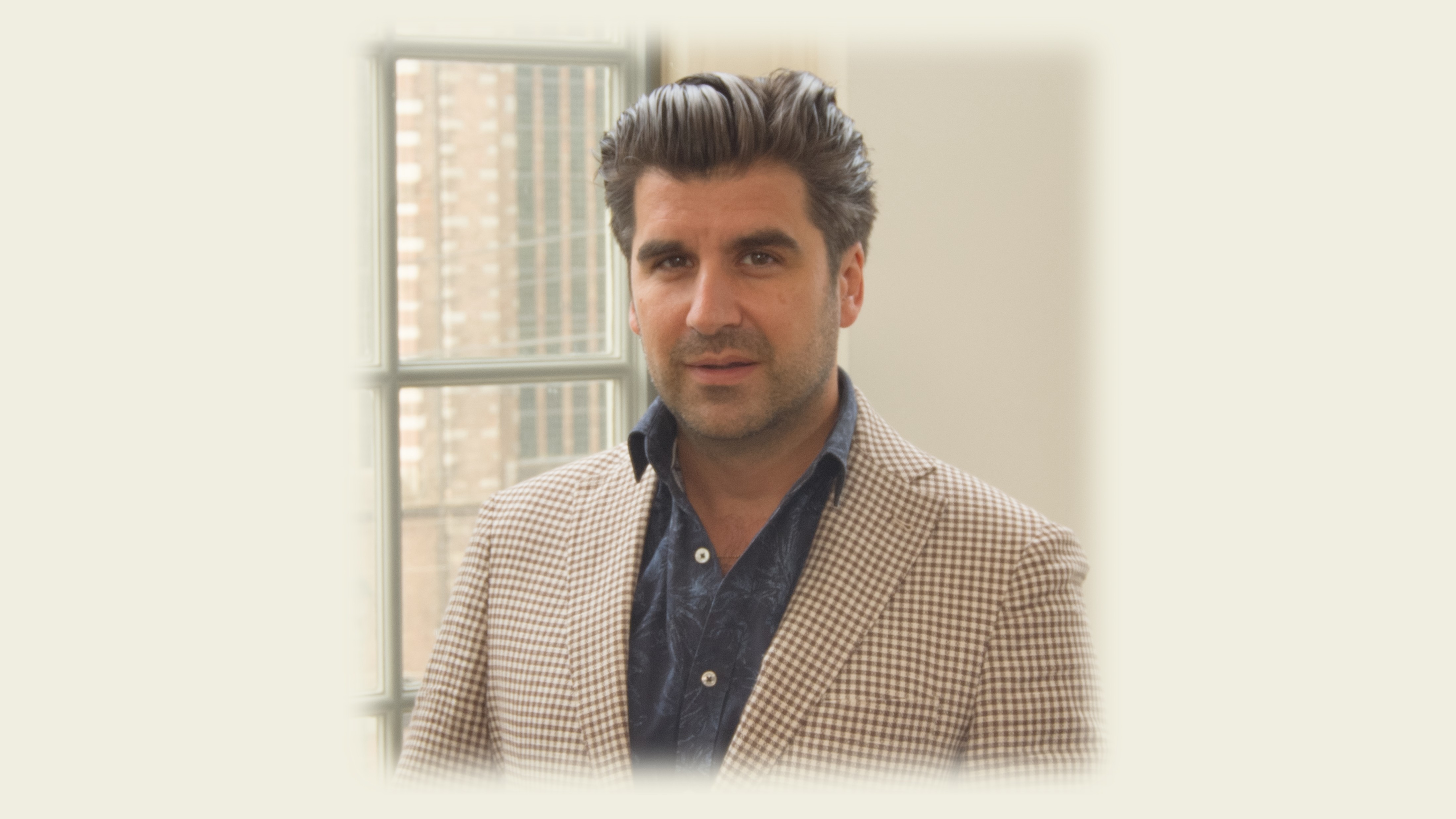
Dr. Tim Sweijs, Forschungsdirektor The Hague Centre for Strategic Studies (HCSS)
Tim SweijsRegistration takes place via the website of the Federal Academy for Security Policy. Please click here.
The language of the presentation is English. Simultaneous interpretation is not available.
Lieutenant Colonel Michael Gutzeit
Tel.: 0331 9714 400
ZMSBwPressestelle@bundeswehr.org
The evening event is taking place as part of the 65th International Conference on Military History (ITMG) in the "Historischer Saal" of the Federal Academy for Security Policy (BAKS) in Berlin.
Federal Academy for Security Policy
Ossietzkystraße 44/45
13187 Berlin

